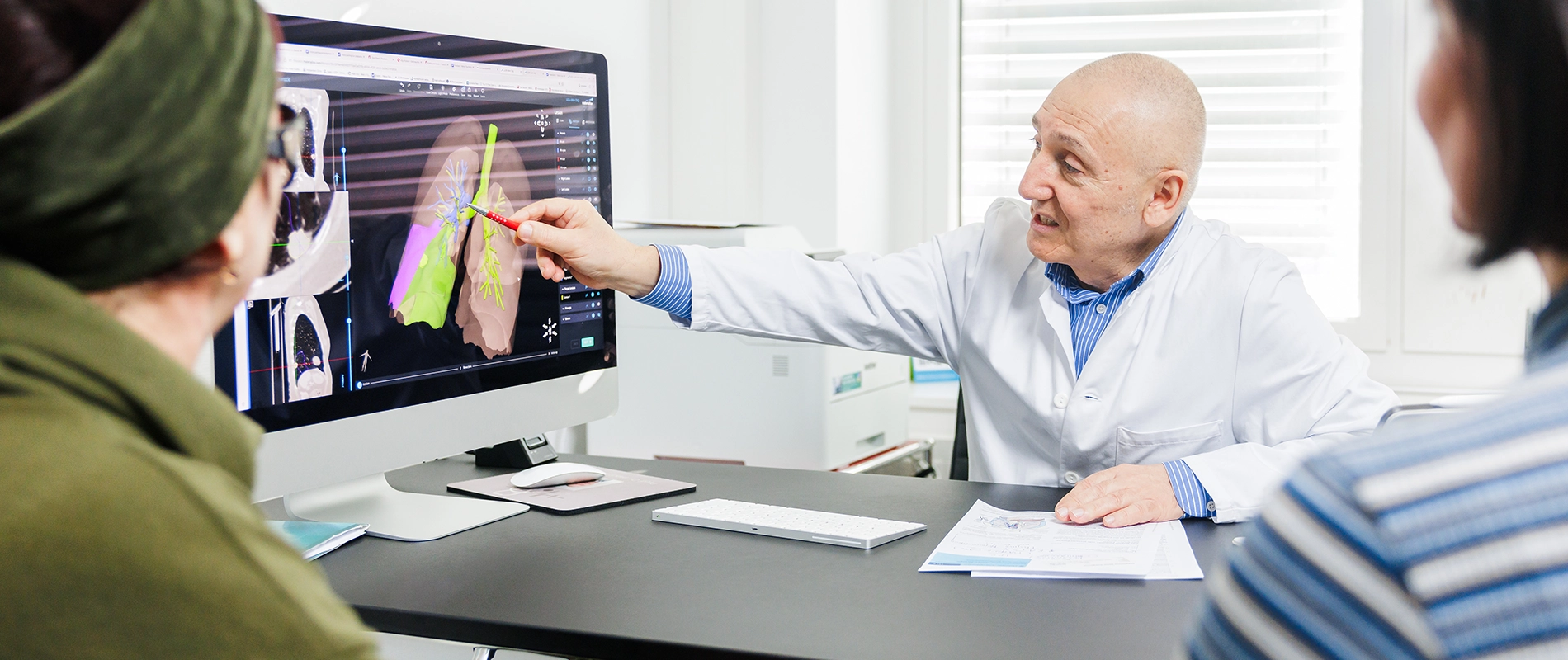
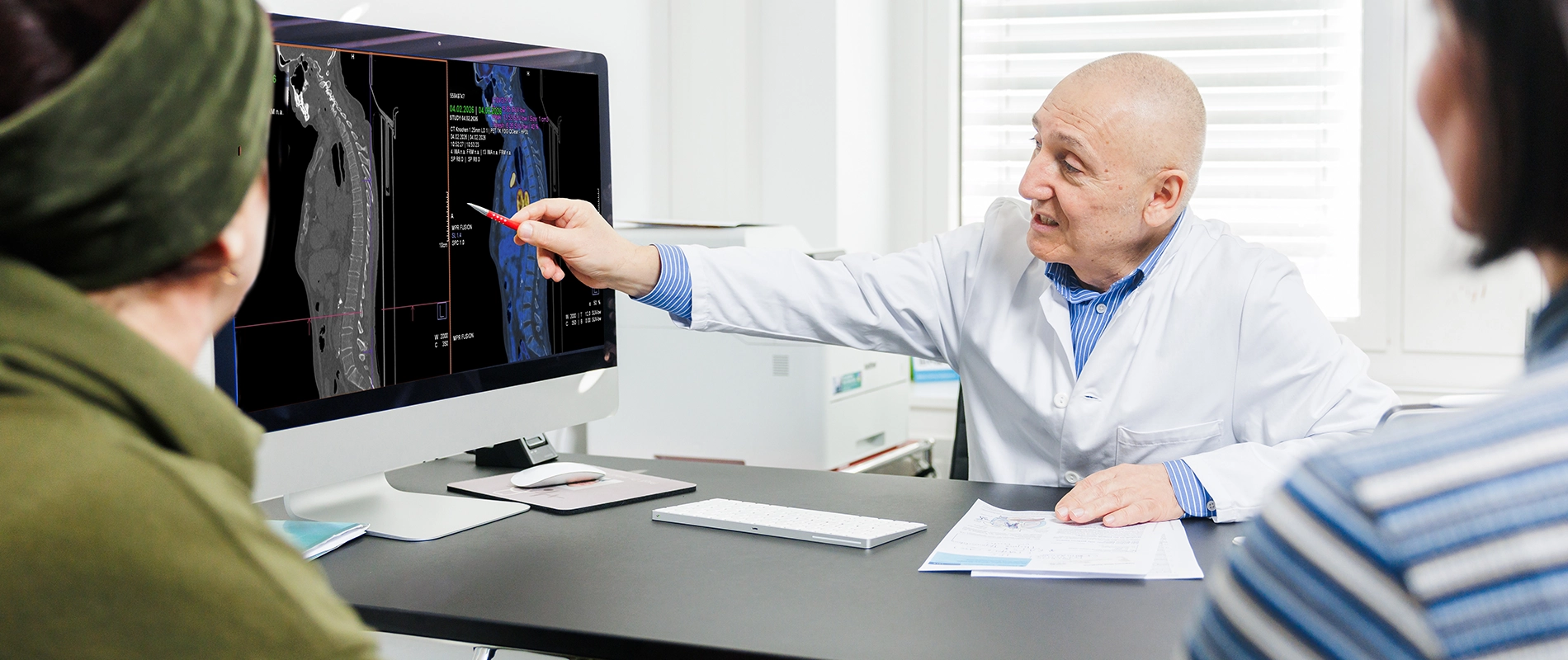
A pulmonologist at LungenZentrum Hirslanden Zürich points to a chest X-ray during an interdisciplinary board meeting

Thoracic Tumour Board at LungenZentrum Hirslanden Zürich

The thoracic tumour board (thoracic = relating to the chest) is a regular interdisciplinary conference at which specialists from different disciplines jointly discuss patients with lung cancer and other tumours in the chest. As the largest private clinic for lung diseases in Switzerland, LungenZentrum Hirslanden offers this structured interdisciplinary collaboration at the level of a university hospital.

At the tumour board, all diagnostic findings are analysed and the most suitable treatment strategy is determined for each patient. This combined expertise ensures a comprehensive assessment of your condition and a treatment recommendation based on the latest medical knowledge.

The thoracic tumour board is attended by specialists from different disciplines, each contributing their own expertise:

  • Pulmonologists specialising in lung diseases and lung cancer
  • Thoracic surgeons for surgical treatment
  • Oncologists for drug-based cancer treatments
  • Radiologists for the assessment of imaging
  • Pathologists for histological diagnosis
  • Radiation oncologists for radiotherapy

Other specialists, such as cardiologists or gastroenterologists, are consulted as required. This broad range of expertise allows your condition to be considered comprehensively from different perspectives.

Before the tumour board meeting, all relevant examination results are compiled. These include imaging such as computed tomography, PET-CT or MRI, pathological findings from tissue samples, laboratory values and information about your general state of health.

At the tumour board meeting, your case is presented and discussed in detail. The specialists jointly analyse the diagnosis, the tumour stage and any other existing conditions. Various treatment options are discussed on the basis of current guidelines and scientific evidence.

At the end of the discussion, a treatment recommendation is made that takes all relevant aspects into account. This recommendation is then discussed with you in a detailed consultation, during which we explain the proposed treatment, answer your questions and plan the next steps together with you.

Depending on the type and stage of lung cancer, various treatment options may be considered. The tumour board’s treatment recommendation takes all individual factors into account.

In early tumour stages, surgical removal is often possible. The thoracic surgeons remove the tumour and, if necessary, affected lymph nodes. In many cases, the operation can be performed minimally invasively.

In more advanced stages, or if surgery is not possible, drug therapies are used. These include chemotherapy, targeted therapies and immunotherapies. The choice of medication depends on the tumour type and the molecular characteristics of the tumour.

Radiotherapy can be used on its own or in combination with other treatments. It is used to shrink the tumour or to treat metastases.

A combination therapy, in which different treatment methods are coordinated, is often recommended. The tumour board determines the order and combination in which the therapies should be carried out.

Your case is also discussed regularly at the tumour board during treatment. We check the response to therapy by means of follow-up examinations and adjust treatment as necessary.

If your condition changes or complications arise, your case is discussed again at the tumour board and the treatment strategy is adjusted accordingly. This continuous interdisciplinary care ensures flexible treatment that is tailored to your current situation.

The thoracic tumour board is also available for second opinions and external referrals. If you are already being treated elsewhere and would like an additional assessment, we will be happy to discuss your case at our tumour board.

Referring physicians can register their patients for discussion at the tumour board. After the discussion, they receive a detailed report with the board’s treatment recommendation.

Benefits of a tumour board discussion

Having your case discussed at the thoracic tumour board offers you important benefits. Different specialists contribute their expertise and look at your condition from different angles. As a result, you receive a well-founded and carefully considered treatment recommendation.

Treatment is based on the latest scientific evidence and guidelines. Complex cases are discussed in detail, so that rare treatment options can also be considered.

Structured interdisciplinary collaboration avoids delays in the treatment process and ensures that all necessary steps are initiated promptly. For you, this means a high level of medical safety and the reassurance that your treatment is supported by an experienced team.